
Factory-verified, high-reliability video wall panels, interactive surfaces, and ultra-high-nit outdoor totems engineered for continuous 24/7 public broadcast.
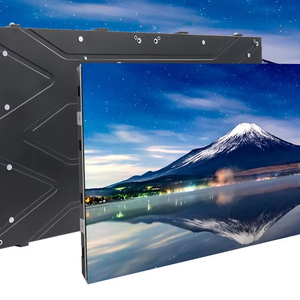
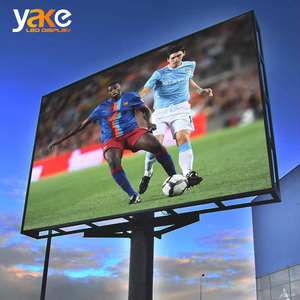
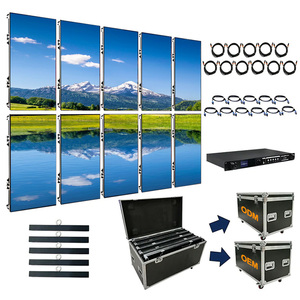
Modern architectural Digital Out-of-Home (DOOH) networks, municipal smart-city installations, and high-footfall commercial plazas increasingly demand ruggedized, free-standing Digital LED Totems over legacy backlit static kiosks and transmissive LCD enclosures. In high ambient light environments, commercial LCD kiosks suffer from backlight failure, isotropic blackouts caused by direct sunlight exposure (clearing temperature limitations), and significant brightness attenuation within 24 to 36 months of deployment. Conversely, direct-view Light Emitting Diode (dvLED) totems deliver sustained luminance upwards of 5,500 to 8,000 nits, dynamic contrast ratios exceeding 5,000:1, and an operational Mean Time Between Failures (MTBF) of 100,000 hours.
However, the global procurement landscape for LED totems is fraught with supply-chain volatility, deceptive binning tolerances, substandard structural metallurgy, and inadequate thermal dissipation designs. As digital infrastructure assets expected to generate advertising yields or mission-critical public announcements over a 7-to-10-year lifespan, evaluating prospective Digital LED Totem suppliers and exporters requires an exhaustive audit of manufacturing topologies, component provenance, thermal thermodynamic modeling, and after-sales calibration infrastructure.
The visual fidelity and operational longevity of an outdoor or indoor LED totem are directly dictated by diode selection and semiconductor packaging. Enterprise-grade totem displays utilize customized Surface Mount Device (SMD) packaging or cutting-edge Chip-on-Board (COB) integrations. Crucially, tier-one manufacturers enforce strict MacAdam Ellipse (SDCM ≤ 3) color binning across all production runs. When diodes from divergent chromaticity bins are integrated into a single totem face, chromatic aberration and blotchy luminance shifts become glaringly apparent within months of operational run-time.
Beyond the surface emitter, driver IC architecture governs electrical efficiency and image stability. Substandard totems routinely utilize low-cost dual-latch driver circuits that generate severe scan lines, low refresh rates (<1,920 Hz), and poor grayscale performance in shadowed areas. In contrast, advanced LED totem exporters specify high-tier, constant-current Common Cathode driver ICs paired with PWM grayscale engines supporting refresh rates up to 7,680 Hz and 16-bit processing. This architecture isolates independent voltage rails for Red (2.8V) and Green/Blue (3.8V) dies, mitigating surplus heat generation at the silicon level by up to 35% compared to legacy Common Anode topologies.
Unlike indoor modular video walls anchored to concrete load-bearing substrate, free-standing digital totems must endure complex dynamic wind loads, seismic shears, solar radiation thermal loading, and corrosive atmospheric pollutants. Tier-one structural enclosures are engineered utilizing extruded aircraft-grade aluminum or galvanized steel with marine-grade C4/C5 polyurethane powder coatings, preventing galvanic corrosion in high-salinity coastal areas.
True public-realm totems require IP65/IP66 ingress protection ratings on both front and rear chassis faces. Hermetic module sealing prevents micro-particulate airborne dust, industrial exhaust gases, and driving rain from penetrating the internal electronics chamber. Furthermore, vandal resistance is paramount: high-traffic pedestrian zones require displays engineered to withstand IK09 or IK10 mechanical impact standards, frequently achieved through proprietary Glue-on-Board (GOB) polymeric encapsulation or tempered optical bonding.
Thermal accumulation is the primary catalyst for LED lumen depreciation and premature power supply failure. A digital totem operating under direct solar radiant flux in ambient temperatures exceeding 40°C can develop internal core temperatures exceeding 80°C without intelligent thermodynamic regulation. Low-tier assemblers rely on raw exhaust fans that continuously suck ambient dust, moisture, and road contaminants directly across exposed electrical contacts, accelerating PCB tin-whiskering and short-circuit faults.
Premium suppliers employ isolated closed-loop heat exchangers or conductive heat-pipe arrays integrated into the structural chassis. Aluminum cabinet chassis plates function as giant passive heatsinks, drawing caloric energy away from high-density power supply units and module driver boards without introducing exterior corrosive air into the hermetic electronic envelope. Automatic thermal monitoring throttling circuits dynamically govern panel luminance during acute peak midday solar spikes, preserving diode lifecycle integrity while maintaining legibility.
How our independent foundry oversight, rigorous testing protocols, and patented power management infrastructure safeguard capital investments worldwide.
Rather than pushing rigid proprietary assembly line surplus, we collaborate with hand-selected, specialized global manufacturing foundries. Each project leverages custom-engineered Intellectual Property (IP) and tier-one components tailored specifically to environmental, optical, and regulatory demands.
Our dedicated display engineers are permanently deployed on the foundry floor. Every single totem undergoes exhaustive multi-point verification, including 72-hour thermal continuous burn-in, vibration drop testing, optical spectrometer batch calibration, and formal Factory Acceptance Testing (FAT).
Our globally patented, UK-engineered digiLED ZEUS® power management platform safely shuts down display hardware to absolute zero wattage standby. Venues and DOOH operators reduce unnecessary phantom grid draw, significantly lowering carbon footprints and slashing utility expenditures.
Rapid response lifecycle resilience supported through dedicated regional Pixel Depots in Las Vegas (Americas) and the United Kingdom (EMEA). We stock production-matched diode batches, driver ICs, and control cards to guarantee rapid turnaround and pixel-perfect field servicing.
Analyzing technological evolutions, regulatory shifts, and architectural design mandates shaping DOOH infrastructure investments over the next decade.
Outdoor totem specifications are rapidly transitioning from legacy P4 and P3.91 modules down to sub-1.9mm Chip-on-Board (COB) and MicroLED-in-Package (MIP) architectures. As pedestrian engagement distances compress in mixed-use developments, buyers prioritize near-seamless close-proximity legibility combined with the chemical, impact, and waterproof resilience inherent to surface-encapsulated MicroLED arrays.
Enterprise totem procurements now frequently mandate the integration of edge compute platforms with environmental sensors and optical camera telemetry. Embedded processors adjust nit luminance millisecond-by-millisecond against ambient solar glare while executing real-time programmatic content switching based on pedestrian dwell times, ambient weather fluctuations, and audience demographic indices.
Municipal tenders and corporate campuses enforce strict power consumption caps to align with Net Zero carbon frameworks. Procurement specifications increasingly favor Common Cathode circuits paired with intelligent power cutoff systems like digiLED ZEUS®, ensuring displays eliminate phantom idle power draws when static operations cease during curfew hours, cutting lifetime energy costs by up to 38%.
Bulky, depth-heavy totem enclosures are giving way to sleek, double-sided (bilateral) architectural designs measuring under 90mm in structural depth. Incorporating advanced high-transmission internal thermals and modular front-access service mechanics, these svelte totems seamlessly integrate into luxury retail corridors and transit hubs without obstructing pedestrian sightlines.
As the line between indoor micro-pitch video walls and outdoor DOOH displays blurs, research and development across premier hardware engineering laboratories are focused on three core technical disciplines: optical contrast elevation, optical transparency integration, and structural miniaturization.
Traditional matte-finish SMD masks struggle under direct midday solar incident angles, resulting in washed-out black levels and compromised contrast ratios. Next-generation totems incorporate optical nano-coatings and micro-louver structures applied directly across the display face. These microscopic fins deflect high-angle solar radiation while channeling horizontal light emission directly toward viewer eye-levels, yielding true 10,000:1 real-world dynamic contrast ratios without pushing excessive diode drive currents that degrade silicon lifespans.
Historically, discovering a dead diode or degraded power rail required on-site manual inspection or end-user notification. Emerging totem ecosystems implement predictive IoT telemetry via cloud-linked receiver architectures. Engineering teams continuously monitor individual ribbon cable data packet loss, module voltage fluctuations down to 0.05V, ambient humidity ingress via internal chamber hygrometers, and per-pixel color degradation curves. Potential component failures are automatically flagged, enabling zero-downtime preventative maintenance before noticeable public outages occur.
Definitive engineering answers addressing total cost of ownership, optical metrics, wind engineering, and international warranty execution.
Whether you require bespoke architectural totems, fine-pitch indoor retail displays, or hurricane-rated DOOH billboards, our engineering team provides end-to-end specification, optical analysis, and factory-level validation.
Contact Us